Standby power rarely looks important when viewed one device at a time. A television waiting for a remote command or a connected appliance maintaining its settings may draw only a small amount of electricity. Yet these loads can remain active for many hours. When a home runs on stored solar energy, time turns small wattages into measurable kilowatt-hours. Understanding this background demand makes battery runtime easier to predict and reveals how much stored energy remains available for the appliances people actively use.
Standby power is the electricity equipment consumes while it remains connected but is not performing its main function. The useful calculation is watts multiplied by hours. A device drawing 5 W for 20 hours uses 100 Wh, or 0.1 kWh. If ten devices followed that same pattern, together they would consume 1 kWh over the period. The example is intentionally simple, but it shows why background consumption belongs in a battery storage runtime calculation. A brief high-power task may end within minutes, while small connected loads can continue throughout an evening and overnight. Battery capacity therefore serves both visible activities and the quieter electrical demand that accumulates between them.
A room-by-room inventory makes background demand easier to identify without mixing it with active appliance consumption. In the living area, consider televisions, entertainment equipment, speakers, and connected accessories. A home office may contain monitors, docks, printers, networking devices, and chargers. Kitchen equipment can retain displays, clocks, controls, or connected functions between active uses. Smart-home equipment may remain available throughout the day. Record the standby wattage for relevant devices where reliable product information is available, then estimate how many hours each spends in that state. Grouping these figures by room produces a useful map of persistent household demand and shows which spaces contribute most to the energy consumed while very little appears to be happening.
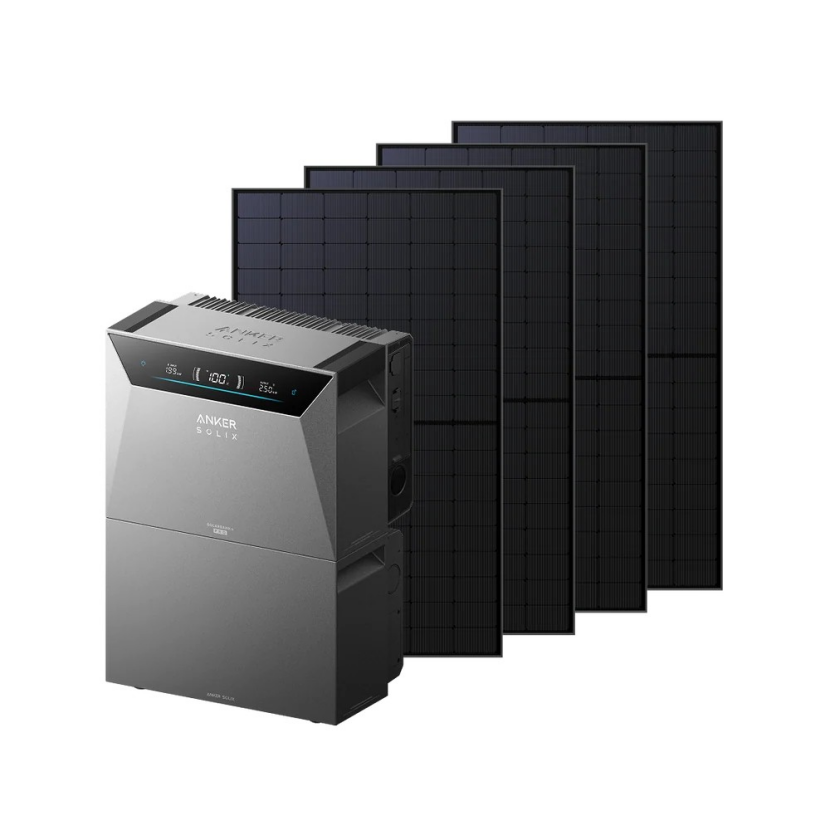
After identifying individual standby loads, convert them into one baseline figure. Suppose all selected background devices together average 40 W over a 12-hour overnight period. They would consume 480 Wh, or 0.48 kWh. Against a nominal 5 kWh battery capacity, that amount represents a meaningful part of the overnight energy budget before active tasks enter the calculation. The Anker SOLIX Solarbank 4 E5000 Pro provides 5,000 Wh of base capacity and can expand up to 30 kWh. Rather than assigning a universal runtime to either capacity, subtract the household’s measured background requirement first. The remaining energy can then be allocated to refrigeration, lighting, heating-related equipment, computers, or other planned uses with greater clarity.
Standby consumption becomes especially useful to examine overnight because many active household loads disappear while connected equipment continues drawing electricity. Compare the home’s energy use immediately before sleep with its consumption during quieter overnight hours. That lower, steadier section can reveal the household’s baseline more clearly than a busy evening filled with cooking and entertainment. Anker positions the 5 kWh Solarbank 4 E5000 Pro for powering a standard UK household through the night. For a particular household, understanding its overnight baseline adds valuable context to that capacity. The calculation can separate persistent consumption from deliberate nighttime uses, making it easier to see where stored energy goes across a long period with relatively little active appliance use.

Smart monitoring can make standby demand visible as an energy pattern rather than a list of guesses. Solarbank 4 E5000 Pro works with Smart Meter Gen 2 for real-time monitoring. Its dual-circuit design monitors the main grid, while the second channel can track third-party solar output or provide active circuit overload protection. To examine background demand, users can compare periods with normal household activity against quieter periods when major appliances are inactive. Repeated readings can reveal a recurring base level that remains present across similar hours. This approach also distinguishes standby demand from short appliance events. A dishwasher cycle creates a defined activity, for example, while background loads form a persistent electrical floor beneath changing household consumption.
Standby power affects more than overnight runtime because many connected devices remain ready throughout the full day. A 10 W background load operating for 24 hours consumes 0.24 kWh. Five equivalent loads would reach 1.2 kWh over the same period. Looking across 24 hours therefore reveals energy use that a short evening calculation can overlook. Solar generation can supply part of this ongoing demand during daylight, while stored energy can take over during other periods. Solarbank 4 E5000 Pro supports up to 5,000 W of solar input through four MPPTs supporting 4 to 12 panels. Tracking background demand alongside daytime production shows when solar electricity serves that baseline directly and when the battery becomes its energy source.
Standby power affects solar battery runtime through accumulation. Small loads can operate for many hours, turning modest wattages into measurable energy consumption across an evening, overnight period, or full day. A room-by-room inventory can identify these loads, while a background baseline shows their combined effect more clearly. Real-time monitoring then adds household-specific evidence. Once standby consumption is separated from active appliance use, battery runtime calculations can account for both the electricity people deliberately use and the quieter demand that continues between activities.
Copyright © 2023 infomorespace.com. All rights reserved.