
Kilowatts and kilowatt-hours describe two separate parts of battery performance. A kilowatt, or kW, measures power: the rate at which electricity moves at a particular moment. A kilowatt-hour, or kWh, measures energy: an amount of electricity delivered or stored over time. The distinction becomes important when reading home battery specifications because a system needs both sufficient energy capacity and suitable power capability. Once these units are separated, figures for storage, charging, solar input, and household output become much easier to understand.
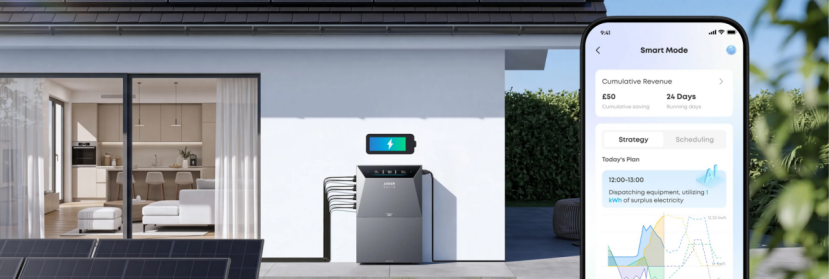
A kilowatt measures power at a moment in time. One kilowatt equals 1,000 watts. If an appliance draws 2 kW while operating, that figure describes its current rate of electricity use. Battery specifications use kW in several ways, including charging power, output power, and solar input. The Anker SOLIX Solarbank 4 E5000 Pro illustrates these different roles clearly. It has 2,500 W, or 2.5 kW, of on-grid AC output and a built-in 2,500 W off-grid port. It also supports 5,000 W, or 5 kW, of solar input. All three figures describe rates of power flow rather than quantities of energy stored inside the battery.
A kilowatt-hour adds time to the equation. If a device draws 1 kW continuously for one hour, it consumes 1 kWh. If it draws 0.5 kW for two hours, it also consumes 1 kWh. Battery capacity therefore appears in kWh because capacity describes how much energy the battery can hold. Solarbank 4 E5000 Pro has a base capacity of 5,000 Wh, which equals 5 kWh, and the system can expand up to 30 kWh. Anker positions the base capacity as enough to power a standard UK household through the night. The actual household energy pattern determines how that stored amount is distributed among appliances and operating periods.
The basic relationship is simple: energy in kWh equals power in kW multiplied by time in hours. This formula can translate appliance operation into energy use. A hypothetical 0.5 kW load running for four hours consumes 2 kWh. A 2 kW load running for 30 minutes also consumes 1 kWh because half an hour equals 0.5 hours. The same relationship works in reverse. Dividing an energy amount by a period of time produces an average power rate. This distinction is useful when researching the cost of solar panels and battery uk, because system specifications can only be compared meaningfully when buyers know whether each figure represents stored energy, charging rate, solar input, or electrical output.
Charging specifications often place kW and kWh close together, which makes their separate meanings especially useful. Solarbank 4 E5000 Pro has a 5 kWh base capacity and supports 2,500 W fast recharge. Anker states that the 5 kWh battery can fully charge in under two hours at off-peak rates. Here, 5 kWh describes the battery’s energy capacity, while 2.5 kW describes its charging power. These numbers answer different questions. Capacity indicates the amount of energy associated with the battery’s storage rating. Charging power indicates the rate at which electricity can enter the system under the specified charging mode. Reading both figures together creates a much clearer picture than comparing either number on its own.
Solar input introduces another power measurement that should remain distinct from battery capacity. Solarbank 4 E5000 Pro supports up to 5 kW of solar input through four MPPTs supporting 4 to 12 panels. Anker also states that supported configurations can generate up to 5,586 kWh annually under its specified conditions. The units reveal an important difference. The 5 kW figure describes a power input rating, while 5,586 kWh describes an amount of energy accumulated across a year. Annual solar production therefore uses kWh rather than kW. This distinction also makes solar specifications easier to read: panel-system power, battery capacity, and annual generation may appear near each other, yet each describes a different part of the energy system.
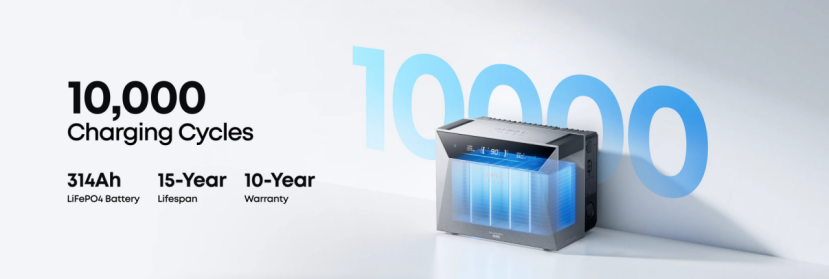
The relationship becomes practical when stored energy reaches household appliances. Solarbank 4 E5000 Pro provides 2.5 kW of on-grid output, while its battery has 5 kWh of base capacity. The first figure relates to the rate at which the system supplies power; the second relates to the quantity of stored energy. Imagine a purely mathematical example where a constant 1 kW load draws energy for three hours. It consumes 3 kWh. If a different load uses 2 kW for one hour, it consumes 2 kWh. Real household demand changes continuously, but the same principle remains useful. kW describes what is happening electrically at a given moment, while kWh records how much energy that activity represents over time.
The difference between kW and kWh becomes simple once time enters the picture. Kilowatts measure power, or the rate at which electricity moves. Kilowatt-hours measure energy accumulated, stored, or consumed over a period. Home battery specifications use both because capacity, charging, solar input, and output describe different functions. Reading each unit according to its role makes technical specifications clearer and allows households to understand how stored energy connects with appliance use, solar production, charging, and everyday electricity demand.
Copyright © 2023 infomorespace.com. All rights reserved.